
The History of Alee Shriners
From our founding to today, discover the traditions, milestones, and brotherhood that shaped Alee Temple
A Legacy of Service
Alee Temple, Ancient Arabic Order Nobles of the Mystic Shrine, was organized on June 23, 1896 pursuant to a dispensation granted by the Imperial Council in session at Cleveland, Ohio. It was the 74th Temple created by the parent body.
Founded in Savannah, Georgia, Alee Temple has carried a tradition of fellowship, service, and civic presence in Savannah since 1896.
From its charter officers and earliest members to the temple's present-day work, this page traces the milestones, homes, and people that shaped that legacy.
The Story of Alee Temple
Alee Temple's history is more than dates and milestones - it is a legacy of fellowship, service, and tradition carried forward for generations in Savannah.
Founding & Early Days
Alee Temple, Ancient Arabic Order Nobles of the Mystic Shrine, was organized on June 23, 1896, pursuant to a dispensation granted by the Imperial Council in session at Cleveland, Ohio. It was the 74th Temple created by the parent body.
With only eight Nobles living in Savannah at the time, a dispensation was issued to communicate the Order to five novices, bringing the initial local number to thirteen. On October 28, 1896, the Order was communicated at a meeting held near the northeast corner of Broughton and Whitaker Streets.
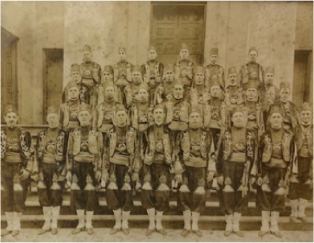
A Visible Presence in Savannah
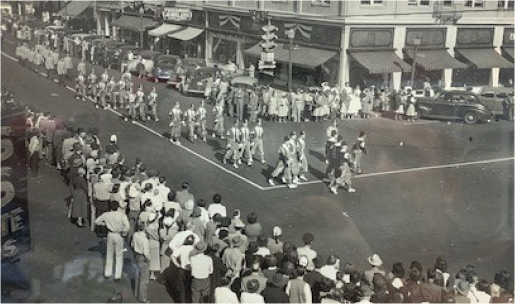
From the earliest days, Alee Temple's Nobles were active in Savannah's civic and community life. Parades, public events, and ceremonial gatherings helped build ties across the city while reinforcing the Temple's mission of service.
The pageantry was memorable, but the purpose was always fellowship and charity, supporting families and helping children through the Shrine's growing philanthropic work.
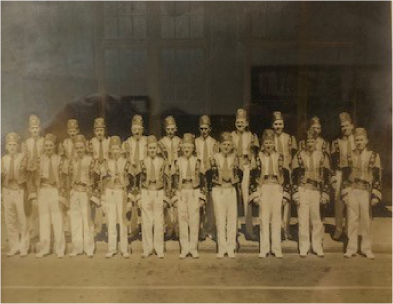
Brotherhood Through the Years
Chartered in June 1896 with 42 members, the Temple experienced steady growth for decades, reaching a peak membership of 3,665 in 1923. Like many institutions, Alee faced hardship during the Depression, with membership falling to 1,383 by 1937.
Growth returned in the 1940s, and Alee continued evolving as the needs of its community changed. Through each era, the Temple's strength remained rooted in the Nobles themselves, committed to tradition, brotherhood, and service.
Founding in Savannah
At that time, there were eight Nobles of the Order living in Savannah. With the number being so small, a dispensation was issued for Noble John H. Cavanaugh to communicate the Order to five novices.
The First Eight Nobles
- John A. G. Carson
- John H. Cavanaugh
- Henry S. Colding
- William D. Krenson
- William Lattimore
- Alfred S. Nichols
- William C. Offutt
- Robert A. Rowlinski
The Five Novices (October 28, 1896)
- Thomas Ballantyne
- Robert L. Colding
- Ernest A. Cutts
- Dr. A. B. Simmons
- Julian Walker
It is noteworthy that Noble Ernest A. Cutts later became Imperial Potentate in 1921-1922.
First Officers & Installation
At the constitution of the Temple, the following officers were elected, selected, and installed.
Installation
- Installing Officer: Past Imperial Potentate Harrison Dingman
- Marshal of Ceremonies: Imperial Recorder B. W. Rowell
Choir
- Julian Walker
- Albert Moyer
- E. K. Demmond
- William A. Reaves
View the full officer slate ▾
Also present at the installation (full list) ▾
Membership Through the Years
Chartered in June 1896 with 42 members, Alee Temple experienced steady growth, shifting with the times and major milestones.
| Year / Period | Milestone |
|---|---|
| 1896 | Chartered with 42 members |
| 1923 | Peak membership reached: 3,665 |
| 1937 | Reduced to 1,383 during the Depression |
| 1940s | Membership increased again and later peaked at 3,063 |
| 1950 | Hasan Temple created with about 800 Nobles transferred |
Our Homes & Landmarks
Through good times and bad, the Temple acquired, sold, improved, and expanded, building spaces for fellowship and service.
| Year | Milestone |
|---|---|
| Prior to 1920 | Meetings held at the Masonic Temple at Liberty and Whitaker and at Guards Hall at Bull and Charlton |
| 1921 | Purchased 429 Bull Street for $45,000 |
| 1923 | Purchased Savannah Yacht Club at Thunderbolt for $20,000; sold in 1944 for $35,000 |
| 1951 | Purchased Walthour Home on Wilmington Island for $40,000 plus $43,000 in furnishing and improvements |
| 1966 | Purchased the current location at 100 Eisenberg Drive |
| Recent Years | Added a building to provide a permanent home for the Haunted House |
Today Alee Temple continues its work from 100 Eisenberg Drive, carrying forward a home built not just for ceremony, but for fellowship, service, and the life of the Temple.
A Legacy Still Moving Forward
Alee Temple continues to serve Savannah through fellowship, philanthropy, family events, and support for the mission of Shriners Children's. The story is still being written by the Nobles who carry it forward.
What began in 1896 as a small body of committed Nobles remains active today through service, tradition, and the shared responsibility of caring for the Temple's future.